QuizNouveau ici ? Faites notre évaluation gratuite en 2 minutes
MoneyClarityL'investissement, simplifié. Sans jargon, sans jugement.
AI & Investing8 min read · March 2026
M
MoneyClarity Editorial
AI & Investing · MoneyClarity
Comment nous sommes financés : MoneyClarity perçoit une commission lorsque les lecteurs se connectent à des partenaires via notre plateforme. Cela n'influence jamais notre contenu éditorial. En savoir plus
French Football Stars and the AI Secret Keeping Them Rich After the Final Whistle
Important: This article is for informational and educational purposes only. It does not constitute financial advice. All investments involve risk, including the possible loss of principal. Always consult a qualified financial adviser before making investment decisions.
Which investment strategy fits your profile?
The same quiz that maps your risk profile across 4 variables — goals, capital, timeline, experience. Get your personalised recommendation, free.
Obtenez votre plan d'investissement personnalisé gratuit
Here is a number that should not be possible.
A professional footballer in Ligue 1 earns, over the course of a career, roughly 700 times the lifetime salary of a French schoolteacher. They drive out of training ground car parks in vehicles that cost more than most people's apartments. Their agents negotiate contracts in eight figures. Their financial futures, by any rational calculation, should be completely secured before they turn thirty.
And yet: research across professional sports consistently estimates that approximately 70% of professional athletes face serious financial difficulties within five years of retiring.
Seven out of ten. Not the ones who never made it — the ones who did. The ones with the contracts, the sponsorships, the boot deals.
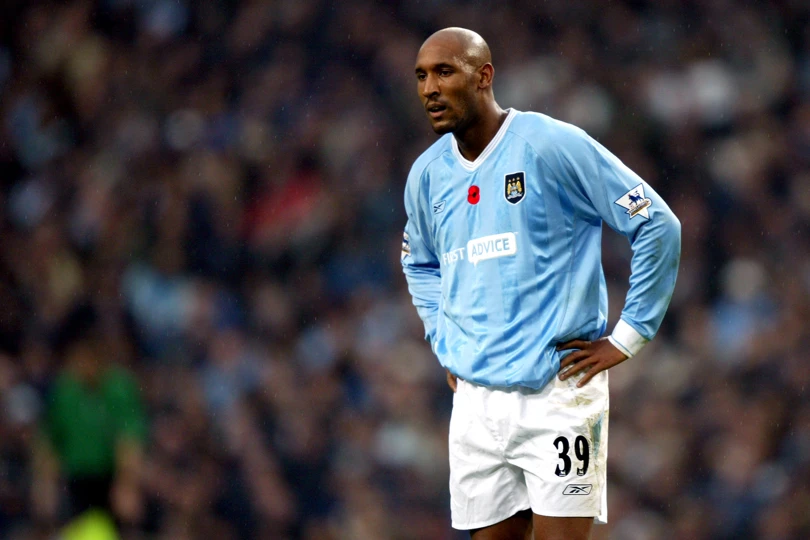
Take two contrasting cases. Nicolas Anelka — arguably the most talented French striker of his generation — reportedly saw significant portions of his fortune dissipate through mismanaged investments and misplaced trust in advisors who collected fees without accountability.
Nicolas Anelka — France's most gifted striker of his generation, and one of professional football's most cited cautionary tales in post-career finance.
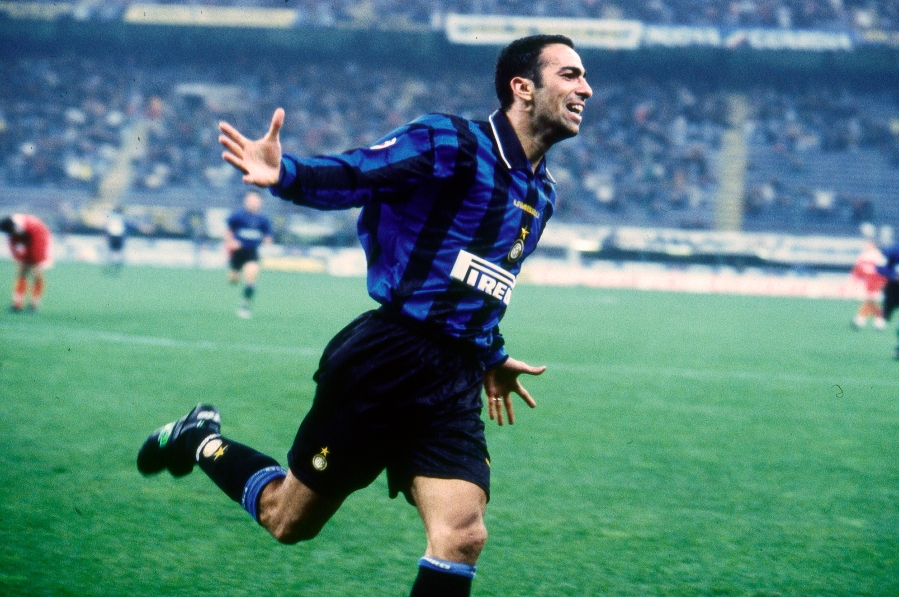
Contrast that with Youri Djorkaeff, who openly discussed building disciplined, diversified investment habits during his career — and who, two decades after his final game, has never needed a second act to pay the bills.
Youri Djorkaeff — built financial discipline into his career from the start. Two decades after his last match, he has never needed a second act.
The divergence between these two trajectories was not luck. It was system design.
The same paradox plays out across France more broadly. According to INSEE, roughly 75% of French private savings sit in fonds euros or Livret A accounts — products designed for capital preservation, not wealth creation. The footballer who blew his fortune and the French saver who parks everything in a Livret A are making the same fundamental error: choosing the absence of risk over the presence of growth.
This is not a story about irresponsibility. It is a story about a broken system — and about the AI tools that are finally fixing it. Those same tools are now available to anyone with €100 and a smartphone.
Why the Numbers Never Worked the Way They Should Have
The footballer's financial problem has never been about income. It has been about three structural failures that, it turns out, also affect ordinary French savers — just in a less dramatic form.
70%
of professional athletes face financial difficulty within 5 years of retiring
FIFPRO Global Employment Report 2023 — post-career financial tracking across 892 professional footballers in 12 countries
14 ans
Average length of a French professional football career
14 working years to fund a 50-year retirement — the compound maths is brutal
0.3%
Annual fee for an AI-managed portfolio
vs. 1.5–2.5% at a traditional private wealth manager — same diversification, fraction of the cost
€303,780
What €300/month becomes over 30 years at 7% average return
The compound formula used by every high-net-worth family office — now accessible from €50/month
The Three Failures That Explain Everything
Failure 1: The Advisor Alignment Problem
Your conseiller at BNP Paribas, Société Générale, or Crédit Agricole is not paid to maximise your returns. They are paid in commissions — a percentage of the products they sell and a percentage of assets they manage, typically running to 1.5–2.5% annually. That fee structure creates an incentive to keep money invested in complex, high-margin products rather than simple, efficient ones. A footballer signing with a major wealth management firm in Paris or Lyon faces exactly the same misalignment as the salarié who trusts their branch adviser's PEA recommendation. The number of zeros changes; the mathematics of misalignment does not.
What changed: Robo-advisors like Yomoni, Nalo, and Moneyfarm charge 0.25–0.75% annually. They use Nobel Prize-winning Modern Portfolio Theory, the same framework institutional managers rely on — with no commission incentive to recommend anything less than the optimal allocation.
Failure 2: The Emotional Decision Problem
A footballer who has just earned €4 million in a transfer feels wealthy in the present tense. The behavioural science term for what happens next is present bias — the tendency to massively overvalue immediately available rewards relative to future ones. Combined with social pressure (teammates, agents, entourage), the short career window, and zero financial education, the result is predictable: money spent at full speed during the earning years, nothing automated for after.
What changed: Automated monthly investments cannot be overruled by emotion. A platform like Trade Republic or Scalable Capital will keep investing €300 every month regardless of whether you feel confident or panicked, whether markets are up or down. The algorithm has no present bias.
Failure 3: The Fee Compounding Problem
This is the failure nobody explains until it is too late. At 2% annual fees on a €1 million portfolio, you pay €20,000 per year — every year, whether the market goes up or down. Over 25 years, the fee drag eliminates what would otherwise become hundreds of thousands of euros in compound returns. Players who thought they were "in good hands" with premium bank products were quietly paying this price throughout their careers.
What changed: ETF platforms like DEGIRO, Trade Republic, and BoursoBank's PEA offer annual fund costs of 0.07–0.20%. The fee problem is now largely a solved problem — if you know which tools to use.
The Three Tools That Rewrote the Playbook
Tool 1: Automated ETF platforms.Trade Republic, DEGIRO, and Scalable Capital allow complete portfolio automation from as little as €1 per month. The MSCI World ETF (tracking 1,500+ companies across 23 countries) can be purchased automatically every month, with zero manual intervention required. This is the core portfolio layer — boring, consistent, mathematically powerful.
Tool 2: AI robo-advisors with PEA tax optimisation.Yomoni and Nalo offer full AI-managed PEA (Plan d'Épargne en Actions) portfolios — meaning your gains are tax-free after 5 years. Moneyfarm operates across France, the UK, and Italy with the same algorithmic rebalancing approach. What used to require a private banker's office in the 8th arrondissement is now accessible through a mobile app.
Tool 3: AI risk management. Stop-loss automation, portfolio stress testing, and continuous rebalancing are now standard features. Scalable Capital's risk engine monitors drift in real-time. eToro's social trading algorithms surface profitable strategies. XTB's market analysis tools process news sentiment faster than any human research team. The protective infrastructure that previously cost a private client relationship fee is now included for free.
The Tax Weapon 80% of French Investors Are Not Using
Only one in five French people under 40 has opened a Plan d'Épargne en Actions — according to the AMF's 2024 investor survey. This means 80% are voluntarily paying income tax on investment gains they could legally eliminate. On a €100,000 gain, the difference between a compte-titres ordinaire and a PEA is approximately €42,000 in tax saved — kept in your portfolio, compounding for another thirty years. The PEA is free to open at BoursoBank, Fortuneo, or Bourse Direct. It takes fifteen minutes. Compare the PEA against Assurance-Vie and CTO with our free tax comparison tool →
Before you read on — find out which strategy fits your profile
AMF investor survey 2024 — the most underused fiscal tool in France
0%
Income tax on PEA gains after 5 years
Social charges (17.2%) still apply — but income tax (up to 30%) disappears entirely
€42,000
Tax saved on a €100k gain (PEA vs. compte-titres)
Assuming 30% flat tax on gains — kept in your portfolio instead of paid to the state
€150,000
Maximum PEA contribution — gains grow tax-free indefinitely above
No cap on portfolio growth, only on deposits
€300/Month at 7%: The Timing Question Nobody Asks Until It's Too Late
Same monthly investment — dramatically different outcomes depending on when you start
Based on €200/month investment, 7% gross annual return. Fee drag compounds significantly over time.
1
Automate before you spend — not after
Every successful footballer advisor who got it right used one rule: the investment transfers out before the rest of the money is touchable. Set up a recurring monthly purchase on your investment platform to trigger on payment day. Trade Republic, Scalable Capital, and BoursoBank all offer this. You never see the money — it goes directly to work.
2
Open a PEA (your legal tax shield)
The Plan d'Épargne en Actions is the most underused financial tool in France. After 5 years, all gains are tax-free (social charges still apply, but income tax disappears). Maximum contribution: €150,000. The equivalent product for a high-net-worth footballer would cost thousands in advisory fees. For you, it is free to open at BoursoBank, Fortuneo, or Bourse Direct. If you haven't opened one, you are leaving a legal tax advantage unused. Not sure whether a PEA, Assurance-Vie, or CTO is right for your situation? Compare them with our free tool →
3
Choose your level of automation
Full hands-off: robo-advisor via Yomoni or Nalo — AI manages allocation, rebalancing, and tax optimisation automatically. Partial: buy a global ETF (Amundi MSCI World, iShares IWDA) on a recurring schedule from a PEA. Active: brokerage account with stop-losses and manual position management. Most beginners do best at tier one or two and graduate to tier three over time. Calculate exactly how much your current fee structure is costing over 20 years with our Fee Impact Calculator →
4
Write your panic protocol before you need it
Market drops of 20–30% happen approximately once every seven years. When they do, the difference between the investors who come out ahead and the ones who crystallise losses is not intelligence — it is preparation. Write down, right now, what you will do when your portfolio drops 20%. For long-term investors, the correct answer is: do nothing. Or: invest more at lower prices. The best footballer advisors call this the pre-commitment strategy. Write it on paper, date it, and put it somewhere visible.
What's your investor profile? Find out in 60 seconds.
The same profiling framework used for high-net-worth clients — adapted for anyone starting from €100. Free, no commitment.
Free Investment Plan
Get your personalised investment plan — free
Personalised strategy report based on your profile
Platform match for your budget & experience
Free call with a senior investment advisor
Free & ConfidentialTakes under 2 minutes
MoneyClarity
How it works
1
Answer 4 questions
About your goals, budget & experience
2
Get your free plan
Strategy, platform match & action steps
3
Speak with an advisor
Free 15-min callback to personalise your plan
Join thousands of investors who built their personalised plan
The Formula That Was Never a Secret
The formula that professional wealth managers charge €5,000 per year to apply is not secret. It is:
Automate contributions. Diversify broadly. Minimise fees. Ignore short-term noise. Give compound interest time to work.
This is not proprietary. The MSCI World ETF, the PEA account, the robo-advisor — these are public products, managed by algorithms, available to anyone. The difference between the footballer who retires wealthy and the one who doesn't is not talent, not even earnings. It is whether someone set up the automation early and left it alone.
You don't need to earn like a Ligue 1 player to invest like one. You need a starting point that matches your profile — your capital, your timeline, your risk comfort. That part takes about sixty seconds to establish.
The tools are ready. The question is whether you are.